
Best LGR Dehumidifiers in 2026: 6 Picks Compared on Specs
The Waykar 150 Pints is our top pick for most buyers: it combines a pump and drain hose with a stated coverage area over 5,000 square feet, making it the most complete package in this comparison. We selected the best LGR dehumidifiers from a pool of six models by comparing the manufacturer-published specifications for capacity, pump, drainage, and intended use. Prices are live and updated from the store listing, so they can change.
6 picks from 7 dehumidifiers that match this guide with a price we can quote today, made by 32 makers. Prices below are live, each shown with the time it was read.
Quick list
| # | Pick | Dehumidifier | Price |
|---|---|---|---|
| 1 | Best overall | Waykar 150 Pints Commercial Dehumidifier with Pump & Drain Hose | $559.99 (as of 10/24/2026 01:53 PDT - Details) |
| 2 | Best for industrial use | ALORAIR 170 PPD Commercial Dehumidifier with Pump | $599.99 (as of 10/24/2026 11:32 PDT - Details) Typical price: |
| 3 | Best for crawl spaces | ALORAIR Commercial Dehumidifier with Pump | $2,876.80 (as of 10/24/2026 11:32 PDT - Details) |
| 4 | Best for professional restoration | Dri-Eaz LGR 2800i Commercial Dehumidifier with Pump | |
| 5 | Best for high-capacity collection | Dri-Eaz LGR 7000XLi Commercial Dehumidifier with Pump F412 | $3,499.99 (as of 10/24/2026 12:32 PDT - Details) |
| 6 | Best for simple installations | Dri-Eaz LGR 3500i Dehumidifier | $4,750.21 (as of 10/24/2026 12:32 PDT - Details) |
Which one is right for you?
- For large basements: If your basement exceeds 5,000 square feet and you need continuous draining, this is the unit with the stated coverage and both pump and drain hose. See pick 1
- For crawl spaces: This unit is the only pick with a crawl space use case, plus it has a pump and memory starting to recover from power outages. See pick 3
- For professional water damage: From an established restoration brand, this unit offers a pump and a 100 to 149 pint per day capacity for moderate jobs. See pick 4
- For industrial spaces: This 170 PPD unit is explicitly marketed for industrial use and includes a pump for high moisture loads. See pick 2
All 6 picks in detail
1 Best overall
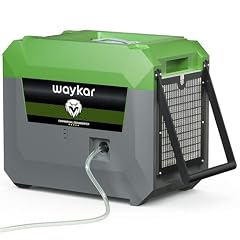
Waykar 150 Pints Commercial Dehumidifier with Pump & Drain Hose
- Pints per day
- 150 pints or more
- Area (sq ft)
- Over 5,000 sq ft
- Type
- LGR
- Pump included
- Yes
- Drain hose included
- Yes
- Commercial or industrial
- Yes
- For basements
- Yes
$559.99 (as of 10/24/2026 01:53 PDT - Details)
This unit is the most complete LGR in the pool: it is the only one with a stated coverage area (over 5,000 sq ft) and the only one that includes both a pump and a drain hose. Its capacity is listed as 150 pints or more, which is among the highest here.
Pros
- Stated coverage over 5,000 sq ft
- Includes both pump and drain hose
- Basement and commercial use
- Capacity of 150 pints or more
Cons
- Capacity is listed as '150 pints or more' with no exact figure
- Coverage area not verified by an independent source
- May be oversized for small spaces
Good fit if
- Basements over 5,000 sq ft
- Users needing continuous drainage without manual emptying
Skip if
- You have a small space under 2,000 sq ft
- You need a unit with an anti-frost sensor (not stated)
Verdict: The most complete LGR package on specs, covering the largest area with the most drainage options.
2 Best for industrial use

ALORAIR 170 PPD Commercial Dehumidifier with Pump
- Pints per day
- 150 pints or more
- Type
- LGR
- Pump included
- Yes
- Drain hose included
- Yes
- Commercial or industrial
- Yes
$599.99 (as of 10/24/2026 11:32 PDT - Details) Typical price: $639.29, 6% off
This unit is explicitly marketed for industrial use with a 170 PPD capacity, and it includes a pump. It lacks the drain hose and coverage area of the Waykar, but it is a strong choice for heavy moisture loads.
Pros
- 170 PPD capacity for heavy moisture loads
- Includes pump
- Suitable for commercial and industrial spaces
- Capacity of 150 pints or more
Cons
- No drain hose
- No coverage area stated
- Anti-frost feature not stated
Good fit if
- Industrial or commercial spaces with high moisture
- Users who can provide their own hose
Skip if
- You need continuous drainage (pump only, no hose included)
- You need a stated coverage area
Verdict: A high-capacity industrial LGR with a pump, but less complete than the Waykar.
3 Best for crawl spaces

ALORAIR Commercial Dehumidifier with Pump
- Pints per day
- 150 pints or more
- Type
- LGR
- Pump included
- Yes
- Commercial or industrial
- Yes
- For basements
- Yes
- For crawl spaces
- Yes
$2,876.80 (as of 10/24/2026 11:32 PDT - Details)
This is the only pick with a crawl space use case, and it also covers basements. It includes a pump and adds a memory starting feature that resumes operation after a power outage, plus a six year limited warranty.
Pros
- Designed for basements and crawl spaces
- Includes pump
- Memory Starting resumes operation after power outages
- 6-year limited warranty
Cons
- Capacity is stated as 'Up to 180 PPD' but not exact
- No drain hose
- No coverage area stated
Good fit if
- Crawl spaces and basements with seasonal power outages
- Users who want a long warranty
Skip if
- You need a hose for direct draining
- You need a unit with a stated coverage area
Verdict: The only pick with crawl space coverage and power-outage memory, backed by a long warranty.
4 Best for professional restoration

Dri-Eaz LGR 2800i Commercial Dehumidifier with Pump
- Pints per day
- 100 to 149 pints
- Type
- LGR
- Pump included
- Yes
- Commercial or industrial
- Yes
Dri-Eaz is a recognized name in water damage restoration, and the LGR 2800i includes a pump and a 100 to 149 pint per day capacity, which suits moderate to heavy moisture loads in professional settings.
Pros
- Pump included
- Capacity of 100 to 149 pints per day
- From an established restoration brand
- Commercial use category
Cons
- Capacity lower than the 150+ pints picks
- No coverage area stated
- No drain hose
Good fit if
- Professionals doing water damage restoration
- Users needing a pump for elevated drainage
Skip if
- You need the highest capacity
- You need a hose for direct drain
Verdict: A solid commercial LGR from a professional brand, with a pump and moderate capacity.
5 Best for high-capacity collection

Dri-Eaz LGR 7000XLi Commercial Dehumidifier with Pump F412
- Type
- LGR
- Pump included
- Yes
- Commercial or industrial
- Yes
$3,499.99 (as of 10/24/2026 12:32 PDT - Details)
The name includes '29 Gallon', which suggests a large collection tank, and it has a pump for automatic drainage. It is a commercial grade unit, though its capacity in pints per day is not stated.
Pros
- 29-gallon collection capacity
- Pump included
- Commercial use
- Part of the Dri-Eaz LGR line
Cons
- Capacity not stated in pints
- No coverage area
- No drain hose
Good fit if
- Jobs with long runtimes between tank empties
- Commercial users needing a large tank
Skip if
- You need a specific pint-per-day capacity
- You need a drain hose
Verdict: A high-collection-capacity LGR with a pump, though its capacity in pints is not stated.
6 Best for simple installations

Dri-Eaz LGR 3500i Dehumidifier
- Type
- LGR
- Pump included
- Yes
- Commercial or industrial
- Yes
$4,750.21 (as of 10/24/2026 12:32 PDT - Details)
This unit has no pump, so it must rely on gravity drainage or manual emptying. That can be simpler and have fewer parts to maintain, but it also means you need a floor drain at the same level or are willing to empty the tank.
Pros
- LGR type for low-grain operation
- From an established manufacturer
- No pump to maintain
Cons
- No pump, so no automatic drainage
- Capacity not stated
- No coverage area or drain hose specified
Good fit if
- Installations with a floor drain at the same level
- Users who prefer a simple, pump-free setup
Skip if
- You need to pump water upward
- You need a stated capacity
Verdict: A bare-bones LGR for simple setups, but missing key specs for comparison.
Specs compared
| # | Dehumidifier | Pints per day | Area (sq ft) | Type | Whole house | Pump included | Drain hose included |
|---|---|---|---|---|---|---|---|
| 1 | Waykar 150 Pints Commercial Dehumidifier with Pump & Drain Hose | 150 pints or more | Over 5,000 sq ft | LGR | not stated | Yes | Yes |
| 2 | ALORAIR 170 PPD Commercial Dehumidifier with Pump | 150 pints or more | not stated | LGR | not stated | Yes | Yes |
| 3 | ALORAIR Commercial Dehumidifier with Pump | 150 pints or more | not stated | LGR | not stated | Yes | not stated |
| 4 | Dri-Eaz LGR 2800i Commercial Dehumidifier with Pump | 100 to 149 pints | not stated | LGR | not stated | Yes | not stated |
| 5 | Dri-Eaz LGR 7000XLi Commercial Dehumidifier with Pump F412 | not stated | not stated | LGR | not stated | Yes | not stated |
| 6 | Dri-Eaz LGR 3500i Dehumidifier | not stated | not stated | LGR | not stated | Yes | not stated |
How we chose these
We started with a pool of six LGR dehumidifiers listed by established makers. Each unit was assessed against its stated capacity, pump presence, drain hose inclusion, coverage area, and intended use. The selection is based on the specifications published by the manufacturers and the details in the product listing. Prices are live and read from the store listing at the time of writing.
What to look for
Capacity: pints per day
Capacity indicates how much moisture a dehumidifier can remove in 24 hours under standard operating conditions. The Department of Energy changed the measurement procedure in 2019, so newer units may display lower pint-per-day numbers than older ones. The ENERGY STAR sizing guide suggests that a large room over 2,000 square feet in a very damp condition may need 40 pints per day or more, while a wet space may need 50 pints or more. In this pool, three units state a capacity of 150 pints or more, which is well above those suggested levels and better suited to commercial or severe situations.
Drainage: pump, hose, or bucket
Every LGR in this pool except the Dri-Eaz LGR 3500i includes a pump, which lets you push condensate upward to a sink or drain. A pump is essential if your drain is above the unit. The Waykar also includes a drain hose, so you can connect it directly to a floor drain and avoid emptying a bucket. The Dri-Eaz LGR 3500i has no pump, which means you will need a gravity drain at the same level or manually empty the collection tank.
Coverage area and space size
Coverage area, usually expressed in square feet, tells you how large a space a dehumidifier can handle. In this pool, only the Waykar states a coverage area (over 5,000 sq ft). The ENERGY STAR sizing chart breaks down recommendations into small rooms (under 2,000 sq ft) and large rooms (over 2,000 sq ft), with higher capacities for very damp or wet conditions. If you have a larger space or a commercial setting, you will likely need a unit with a higher capacity, but a stated coverage area helps confirm the fit.
Operating temperature and anti-frost
Dehumidifiers can lose performance when the air temperature drops below 65 degrees Fahrenheit, and frost can form on the coils. The ENERGY STAR guidance recommends looking for a product specified for lower temperatures. LGR units are designed to operate at lower grain counts, which makes them a common choice for basements and crawl spaces, but not all models state an anti-frost feature. In this pool, none of the picks list anti-frost protection, so if you expect temperatures below 65 degrees, you may want to contact the manufacturer about low-temperature operation.
Energy efficiency and IEF
Energy efficiency for dehumidifiers is expressed by the Integrated Energy Factor (IEF), in liters of water removed per kilowatt-hour (L/kWh). A higher IEF indicates a more efficient unit. ENERGY STAR certified dehumidifiers use more efficient components and remove the same amount of moisture using 20% less energy than conventional units, according to the program. The picks here do not list their IEF values, so compare efficiency directly on the product listings or the ENERGY STAR product finder if that matters to you.
Mold control and moisture
The EPA and CDC both emphasize that the key to mold control is moisture control. The CDC recommends keeping indoor humidity below 50% and drying water-damaged areas within 24 to 48 hours to prevent mold growth. A dehumidifier is one of the tools the CDC lists for lowering humidity. For a damp basement, the University of Minnesota Extension specifically recommends getting a dehumidifier to remove moisture from the air. Pair your LGR unit with prompt repair of any leaks and proper ventilation for the best results.
Questions
What is an LGR dehumidifier?
LGR stands for low grain refrigerant. These dehumidifiers are designed to remove moisture even in cooler, damp environments like basements and crawl spaces, where standard units may be less effective. They operate by pulling air over a cold coil to condense water vapor, and they are specified for lower dew points. In this pool, all six units are marked as LGR, which makes them suitable for challenging moisture conditions.
How many pints per day do I need?
The amount of moisture you need to remove depends on the size of the space and its dampness. The ENERGY STAR sizing chart suggests that a large room over 2,000 square feet that is slightly to moderately damp may need at least 30 pints per day, and a wet space may need 50 pints or more. The picks here are all well above that, with most stated at 100 to 150 pints per day, so they are aimed at large or heavily affected areas.
Can I leave a dehumidifier running continuously?
Most dehumidifiers can run for long periods, but they will cycle on and off to maintain the set humidity level. Units with a pump can drain automatically to a floor drain, while those without a pump require you to empty the collection tank. For continuous operation, look for a unit with a pump and a hose connection, like the Waykar in this pool, which lets you set up permanent drainage.
Do I need a pump in an LGR dehumidifier?
A pump allows the dehumidifier to push water upward to a sink or drain, which is useful when your drain is above the unit's outlet. The Dri-Eaz LGR 3500i in this pool has no pump, so it needs a gravity drain at the same level or manual emptying. All other picks include a pump, which gives you more flexibility in placement.
How do I prevent mold growth in my home?
The EPA and CDC recommend controlling moisture as the key to preventing mold. Keep indoor humidity below 50%, fix any leaks in the roof, walls, or plumbing, and dry water-damaged areas within 24 to 48 hours. Use a dehumidifier in damp spaces like basements, and make sure your bathroom and kitchen fans vent to the outside. The CDC also suggests cleaning moldy surfaces with soap and water or a bleach solution.
Update history
- : First published.